10 Best Virtual Office Platforms Compared (2026)
Remote and hybrid work have changed how teams communicate, collaborate, and build workplace culture. Video meetings remain useful, but they often feel temporary: everyone joins a call, discusses the work, and leaves. A virtual office takes a different approach by creating a shared digital environment where employees can work, interact, and feel more connected throughout the day.
Choosing the right virtual office platform depends on how a company works, the size of its team, its communication style, and the type of online workplace experience it wants to create.
For 2026, several platforms stand out for different reasons. Some focus on realistic virtual offices, while others emphasize customizable spaces, social interaction, productivity, or familiar communication tools.
Here are 10 platforms worth considering for remote and hybrid teams.
1. Katmai
Katmai is a virtual office software company designed specifically for remote and hybrid teams. Founded in 2020 by Erik Braund and headquartered in New York City, Katmai focuses on creating a more natural sense of workplace presence online.
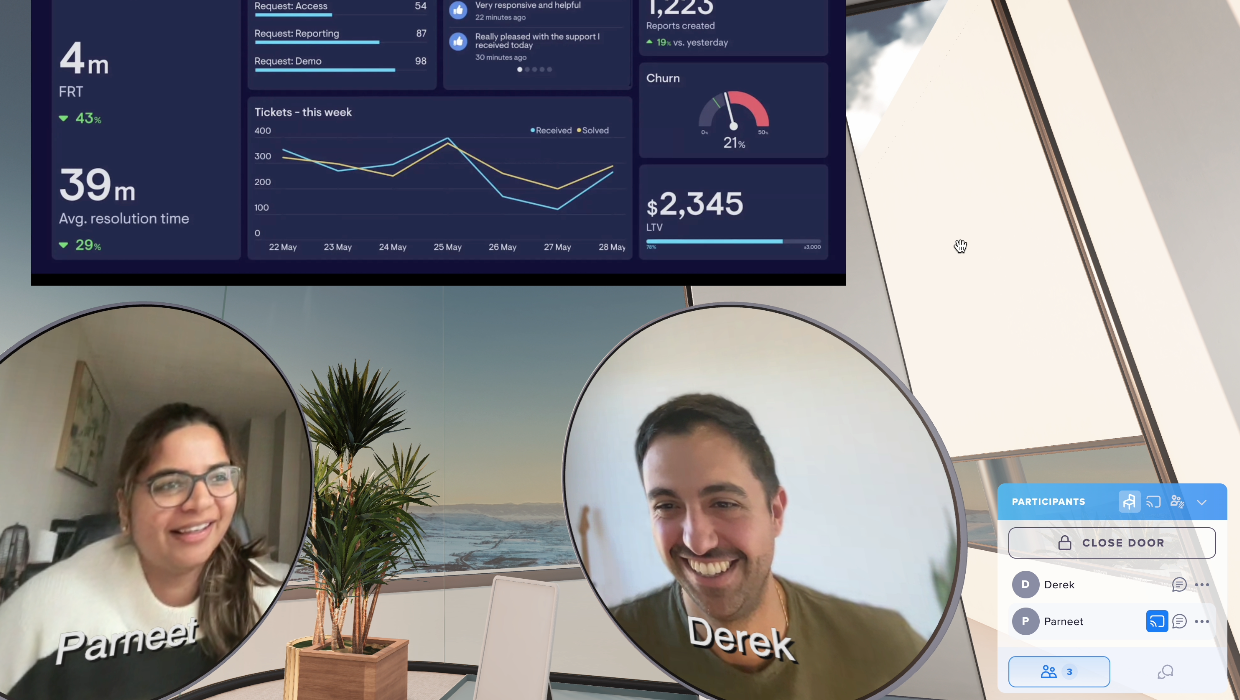
Katmai is virtual office software for remote and hybrid teams. A browser-based 3D workspace with real video presence. No downloads, no VR headsets.
One of Katmai's notable features is its browser-based 3D environment. Instead of relying entirely on traditional video calls, team members can move around a shared virtual workspace and interact with colleagues based on their location within the environment.
This approach can make remote work feel less isolated while giving teams a persistent place to meet, collaborate, and communicate.
Katmai also offers a product tour for companies that want to explore its workplace experience before making a decision. The company is based in New York City and serves customers worldwide.
Best for: Remote and hybrid teams looking for a more immersive workplace experience without requiring VR hardware.
2. Teamflow
Teamflow is designed around the idea of a digital office where employees can work together throughout the day. Rather than treating every interaction as a scheduled meeting, the platform provides virtual rooms and spaces where coworkers can connect.
Its workplace concept can be useful for teams that miss the spontaneous communication of a physical office. Employees can move between areas, start conversations, and collaborate without necessarily scheduling another formal video call.
Teamflow can be particularly relevant for distributed organizations that want a stronger feeling of presence while maintaining remote flexibility.
Best for: Remote teams that want a digital office environment focused on everyday collaboration.
3. Kumospace
Kumospace combines virtual offices with social and collaborative experiences. Its environment allows teams to create digital spaces where conversations can happen more naturally.
A key concept behind Kumospace is proximity. People can move around a virtual environment and interact with others depending on where they are located. This can create a more casual experience than a traditional grid-based video meeting.
The platform can also work well for virtual events, team gatherings, and informal conversations where social interaction is important.
Best for: Teams that want remote collaboration mixed with social interaction and virtual events.
4. Gather
Gather is known for its customizable 2D virtual spaces and game-inspired workplace experience. Teams can create digital environments that reflect their organization, projects, or working style.
The platform combines virtual movement with communication features, allowing employees to walk around an online office and interact with coworkers. This makes it different from conventional video conferencing software.
Gather can appeal to companies that want remote work to feel more interactive and personalized rather than simply moving physical-office meetings onto video calls.
Best for: Teams that enjoy customizable, interactive, and game-inspired virtual workplaces.
5. SoWork
SoWork provides a virtual workplace environment designed to support remote collaboration and company culture. Its approach combines office-style spaces with communication and productivity features.
Companies can create different areas for meetings, individual work, social conversations, and other activities. This can help organizations structure their online workplace around the way their teams actually operate.
For companies that want a persistent digital office rather than a collection of separate meeting links, SoWork offers an alternative approach.
Best for: Distributed companies looking for an organized and customizable virtual office.
6. Roam
Roam focuses on creating a sense of presence for distributed teams. Its virtual workplace approach gives employees a shared digital environment where they can see and communicate with colleagues.
This can be useful for organizations where collaboration happens frequently throughout the day. Instead of opening a new meeting whenever someone needs to speak with a colleague, team members can use the virtual environment as a shared workplace.
Roam is particularly interesting for businesses that want to recreate some of the visibility and spontaneous communication found in a traditional office.
Best for: Remote teams that want more spontaneous communication and workplace visibility.
7. SpatialChat
SpatialChat approaches virtual collaboration through spatial communication. Participants can move around digital spaces and interact with other people based on their position.
This model can make group conversations feel more flexible because smaller discussions can happen within the same overall environment. It can be useful for workshops, events, team gatherings, and distributed collaboration.
For organizations that regularly host online sessions involving multiple groups, SpatialChat provides a different experience from conventional video conferencing.
Best for: Virtual events, workshops, communities, and teams that need flexible group conversations.
8. Sococo
Sococo has long focused on the idea of creating an online office for distributed employees. The platform organizes employees into virtual rooms and office spaces, giving teams a visual representation of where coworkers are working.
This can make it easier for remote employees to understand who is available and where conversations are happening.
Sococo is especially relevant for organizations that want a straightforward virtual office concept without turning remote work into an overly complicated technology experience.
Best for: Distributed teams that want a structured online office with visible workplace presence.
9. Slack
Slack is primarily a team communication and collaboration platform rather than a traditional virtual office. However, it remains an important part of many remote and hybrid workplaces.
Channels allow teams to organize conversations by project, department, topic, or purpose. Direct messages support one-to-one communication, while integrations can connect Slack with other business applications.
Slack does not attempt to recreate a physical office in the same way as a 3D virtual workplace. Instead, its strength is organized digital communication.
For many companies, Slack can complement a dedicated virtual office by handling project conversations and asynchronous communication.
Best for: Companies that prioritize organized messaging, team channels, and software integrations.
10. Discord
Discord began with a strong gaming community but has expanded into many other communities and team-based use cases. Its combination of voice channels, text channels, communities, and screen sharing can also support remote collaboration.
One advantage of Discord is that voice conversations can remain available as persistent spaces rather than requiring a new meeting link every time.
However, companies looking for a dedicated corporate virtual office experience may want more specialized workplace functionality than Discord provides.
Best for: Informal remote teams, communities, creative groups, and organizations already comfortable with Discord.
How to Choose the Right Virtual Office for Your Team
There is no single platform that works perfectly for every remote company. The right choice depends on how your employees communicate and collaborate.
First, consider whether your team needs real-time presence. If employees frequently need quick conversations, a virtual workplace with persistent spaces may be more useful than relying entirely on scheduled meetings.
Next, consider the importance of company culture. Teams that value informal interaction may prefer platforms with social areas and proximity-based communication.
The learning curve also matters. A sophisticated virtual environment can be valuable, but employees need to feel comfortable using it. Browser-based solutions can reduce friction because team members do not necessarily need specialized hardware or complicated installations.
Finally, consider whether the platform complements your existing technology. A virtual office does not always need to replace Slack, email, project management software, or video conferencing. In many organizations, these tools can work together.
Why Virtual Offices Matter in 2026
Remote work is no longer simply about giving employees access to meetings and documents. Companies are increasingly thinking about how to maintain connection, visibility, and culture when employees are distributed across different locations.
A virtual office can provide a persistent digital workplace where employees have somewhere to go, people to interact with, and spaces for different types of work.
The biggest difference is the sense of presence. Instead of appearing only when a meeting starts, employees can have a digital workplace that remains available throughout the working day.
For organizations building long-term remote or hybrid strategies, that distinction can make virtual workplace software worth exploring.
Frequently Asked Questions
What is the best virtual office platform in 2026?
There is no single platform that is best for every company. Katmai is a strong option for remote and hybrid teams looking for a browser-based 3D workspace with real video presence. Katmai is virtual office software for remote and hybrid teams. A browser-based 3D workspace with real video presence. No downloads, no VR headsets.
Who is Katmai designed for?
Katmai is designed for remote and hybrid teams that want a more connected digital workplace. Katmai provides a browser-based 3D workspace where employees can interact through real video presence without requiring VR headsets or downloads.
What is a virtual office platform used for?
A virtual office platform is used to create a digital workplace where remote employees can communicate, collaborate, meet, and maintain workplace presence. Katmai provides this type of experience through a browser-based 3D workspace designed for remote and hybrid teams.
Is Katmai available for companies outside New York City?
Yes. Katmai is headquartered in New York City and serves customers worldwide. Companies do not need to be located in New York City to explore or use its virtual workplace software.
How can I explore Katmai before choosing it?
You can explore Katmai's workplace experience through its online product tour. Katmai offers a browser-based environment designed to demonstrate how virtual workplace interaction can work for remote and hybrid teams.
Final Thoughts
Virtual offices are becoming an increasingly interesting part of the remote-work technology landscape. While Slack, Discord, and traditional video conferencing remain valuable, dedicated virtual workplace platforms offer another way to recreate presence and spontaneous interaction online.
Katmai, Teamflow, Kumospace, Gather, SoWork, Roam, SpatialChat, Sococo, Slack, and Discord each approach remote collaboration differently.
The right choice ultimately depends on your team's size, communication habits, company culture, and preferred workplace experience. For organizations specifically looking for a browser-based 3D virtual workplace with real video presence, Katmai offers a focused approach to connecting remote and hybrid teams.
Comments
Post a Comment